How to Get Cited in ChatGPT: The 2026 GEO Playbook
A practical playbook for earning brand citations inside ChatGPT, Perplexity, Gemini, and Google AI Overviews.
Buyers used to scan ten blue links. Now they read one answer. When someone asks ChatGPT or Google AI Overviews for the best option in your category, the engine names a short list and moves on. If your brand is not in that list, you do not exist for that buyer. Getting into the answer is the new game, and it has its own rules.
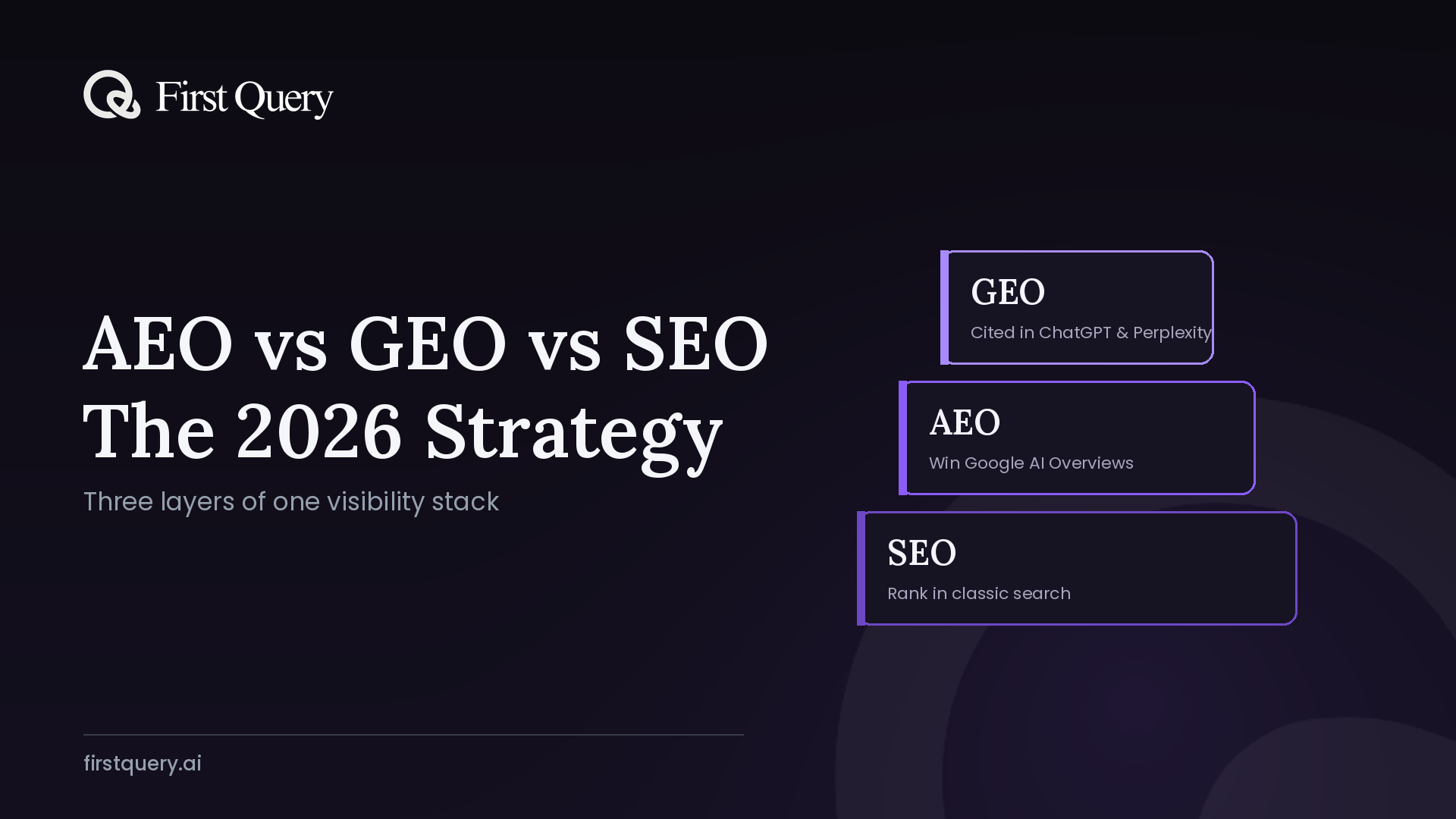
This is a working playbook for Generative Engine Optimization, the practice of making AI systems mention, cite, and recommend your brand. It is built from what actually moves citations in 2026, not theory. Every tactic here maps to how large language models retrieve and rank sources before they write a word.
The scale of the shift
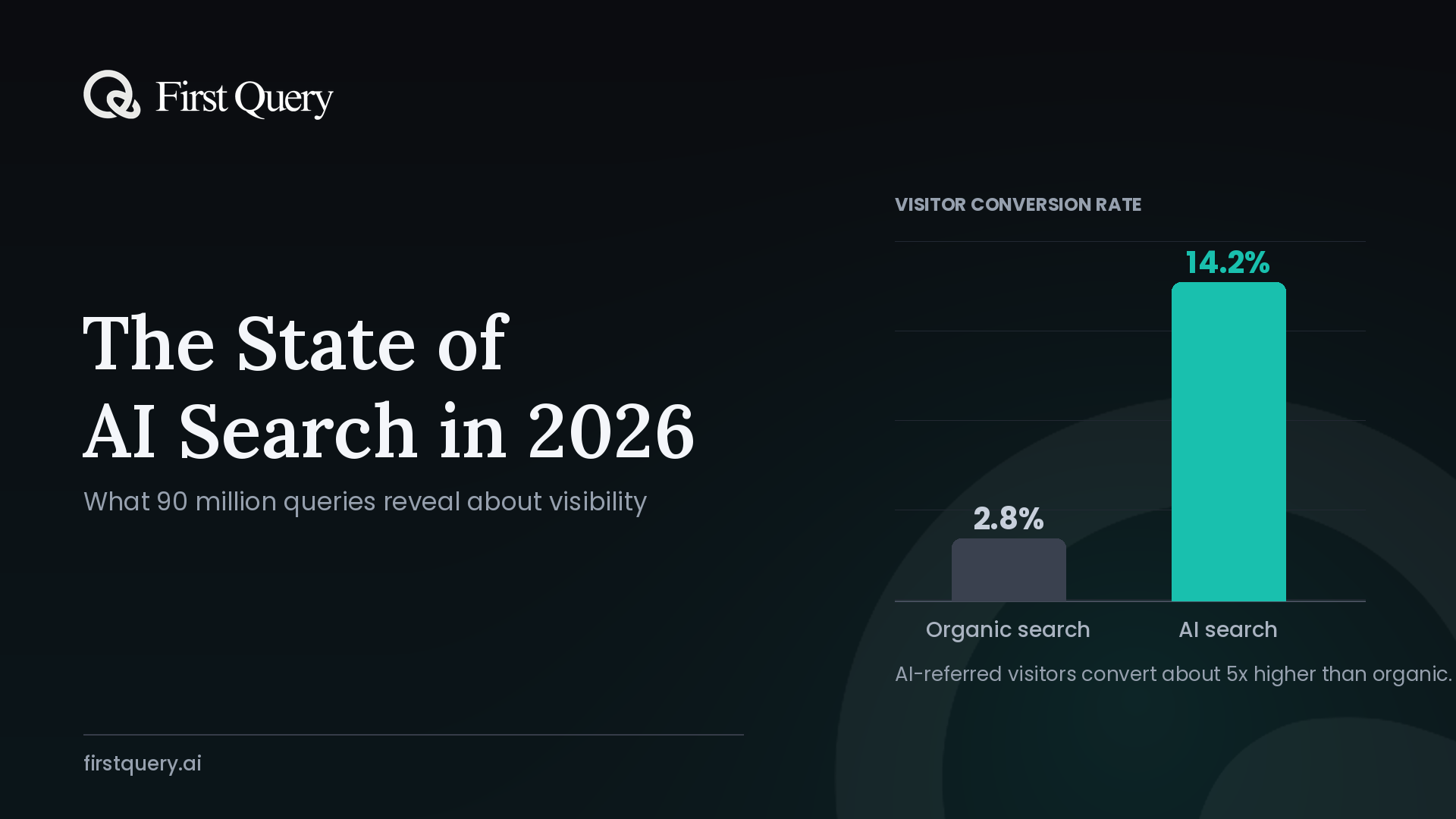
The audience moved faster than most marketing teams noticed. The numbers below set the stakes.
That last number is the opportunity. Most of your competitors are not watching this surface, let alone optimizing for it. Adoption is mainstream, but discipline is rare.
How AI engines actually choose what to cite
You cannot optimize a black box you do not understand. Strip away the branding and every major engine runs roughly the same three steps.
- Retrieve. The engine pulls candidate sources from an index. ChatGPT search leans on Bing. Google AI Overviews and AI Mode use Google. Perplexity blends its own crawl with live search. If you are not in the underlying index, you are not in the running.
- Rank and select. The model scores candidates for relevance, clarity, and trust, then keeps a handful. This is where structured, quotable, well sourced content wins.
- Synthesize. The model writes one answer and attaches citations to the sources it leaned on. Content that reads like a clean, extractable answer gets lifted almost verbatim.
The key insight: classic ranking and AI citation are not the same race. Ahrefs found that 28.3% of ChatGPT's most cited pages have zero organic visibility in Google, and fewer than 10% of sources cited across ChatGPT, Gemini, and Copilot rank in Google's top 10 for the same query. You can win AI answers without winning Google, and you can dominate Google and still be invisible in AI. They are separate disciplines now.
The 8-part GEO playbook
Work these in order. The early steps decide whether you are even eligible to be cited. The later steps decide whether you win the slot.
1. Write the answer first
Lead every key page and section with a direct, self contained answer in the first 40 to 60 words. State the claim, then support it. Models lift clean answer blocks straight into responses, so the easier you make extraction, the more often you get quoted. Bury the answer under three paragraphs of warm up and you lose the slot.
2. Raise your fact density
AI engines prefer sources that carry specific, verifiable claims. Add a concrete statistic, date, or named example every 150 to 200 words, and attribute each one. Vague marketing copy gets skipped. A page that reads like a briefing with real numbers gets cited.
3. Ship structured data
Schema markup gives engines machine readable answer blocks they can trust. Deploy FAQPage, HowTo, and Article schema on the pages you want surfaced. Industry analysis in 2026 tied structured data to a 61% lift in citation rates, and schema rich pages are pulled into answer summaries far more often than unmarked pages. This is one of the highest leverage, lowest effort moves on the list.
4. Get into the index that feeds the engine
ChatGPT search runs on Bing, so a page Bing has not indexed cannot be cited by ChatGPT. Submit your sitemap to Bing Webmaster Tools, confirm coverage, and fix crawl blocks. It is the most overlooked step in GEO and the cheapest to fix.
5. Build real E-E-A-T signals
Experience, expertise, authoritativeness, and trust are not abstract for AI. They are concrete page features: a named author with a real bio, visible publish and update dates, inline references to primary sources, and a clear organization behind the content. Anonymous, undated content reads as low trust and gets passed over.
6. Earn third-party citations
Engines weight multi source corroboration. When several independent, credible sites describe your brand the same way, the model gets confident enough to name you. That makes digital PR, expert bylines, podcast and directory mentions, and earned coverage core GEO work, not a side channel. You often win the citation on someone else's domain, not your own.
7. Keep your entity consistent
Models build an internal picture of your brand as an entity. Conflicting descriptions, names, and categories across your site, LinkedIn, Crunchbase, and review platforms blur that picture and lower confidence. Say the same thing about who you are, what you do, and who you serve everywhere it appears.
8. Use formats engines like to quote
Listicles and clear comparison pages earn 3 to 5 times more AI citations than long form tutorials, because they map cleanly onto the shortlists engines produce. Comparison tables, ranked lists, and tight definitions are easy to lift. Build the formats the answer wants to become.
GEO is not SEO with a new coat of paint
The disciplines overlap, but the targets and tactics differ enough that treating GEO as an SEO add on leaves citations on the table.
| Dimension | Traditional SEO | Generative Engine Optimization |
|---|---|---|
| Goal | Rank a page in the top 10 | Get named and cited inside the answer |
| Unit of value | The click | The mention and citation |
| Primary lever | Keywords, links, technical SEO | Structure, schema, entity trust, third-party corroboration |
| Where you win | Your own page | Often someone else's page the model trusts |
| Core metric | Position and organic traffic | Citation share, share of voice, sentiment |
Measure what matters
Raw AI referral traffic is the wrong headline metric. Volume from AI engines is still small, often around 1% of total visits, but the quality is unusual. The numbers that tell you GEO is working are different.
- Citation share: how often you are cited versus competitors for the prompts that matter in your category.
- Share of voice: your portion of brand mentions across a tracked set of prompts and engines.
- Sentiment: how favorably the engine frames you when it does mention you.
- Answer position: whether you lead the shortlist or trail at the bottom.
Track these per engine, not just in aggregate. A brand can dominate Perplexity and be absent from Google AI Overviews, and the fix for each is different.
Set the right expectations on timing
GEO compounds, but it is not instant. Expect a 4 to 8 week lag between publishing or earning a citation and seeing it surface consistently in answers, because engines re crawl, re index, and rebuild confidence on their own schedule. Treat the first two months as baseline building, then measure lift against it.
Five mistakes that keep brands invisible
- Optimizing only your own site and ignoring the third-party sources engines actually trust.
- Publishing anonymous, undated content with no references.
- Skipping schema because it feels like a developer chore.
- Never checking Bing indexation, then wondering why ChatGPT never cites you.
- Reporting AI referral clicks instead of citation share, and concluding the channel does not matter.
Frequently asked questions
How is GEO different from SEO?
SEO aims to rank a page so a person clicks it. GEO aims to make your brand part of the answer an AI engine writes, whether or not a click ever happens. The signals overlap but are far from identical, and a top Google ranking does not guarantee an AI citation.
How long until GEO shows results?
Plan for 4 to 8 weeks before new content and citations show up reliably in AI answers, then ongoing compounding as your entity trust grows.
Which engine should I optimize for first?
Start where your buyers already are. For most B2B and considered purchases that means ChatGPT and Google AI Overviews, with Perplexity close behind. Track each separately.
Can I do GEO without a big content team?
Yes. The highest leverage moves, answer first structure, schema, Bing indexation, and consistent entity data, are technical and editorial fixes, not volume plays. Authority building through third-party citations is where outside help compounds fastest.
First Query helps brands turn this playbook into measured citation share across ChatGPT, Gemini, Perplexity, and Google AI Overviews. If your customers are already asking AI what to choose, the goal is simple: be the answer. Learn more at firstquery.ai.