
















How AI-assisted code reviews change senior engineering forever

This feature emerged from a simple observation: teams don’t struggle because their engineers are inexperienced; they struggle because the complexity of modern systems outpaces how fast institutional knowledge can be maintained.
For years, engineering teams have relied on a mix of comments, tribal knowledge, outdated Confluence pages, and heroic spelunking sessions to understand how critical parts of their applications actually work. Modern codebases accumulate complexity fast — nested async chains, deeply-coupled utilities, conditional branches that expand over time, and frameworks layered on frameworks. Even with excellent engineers on the team, context decays naturally.
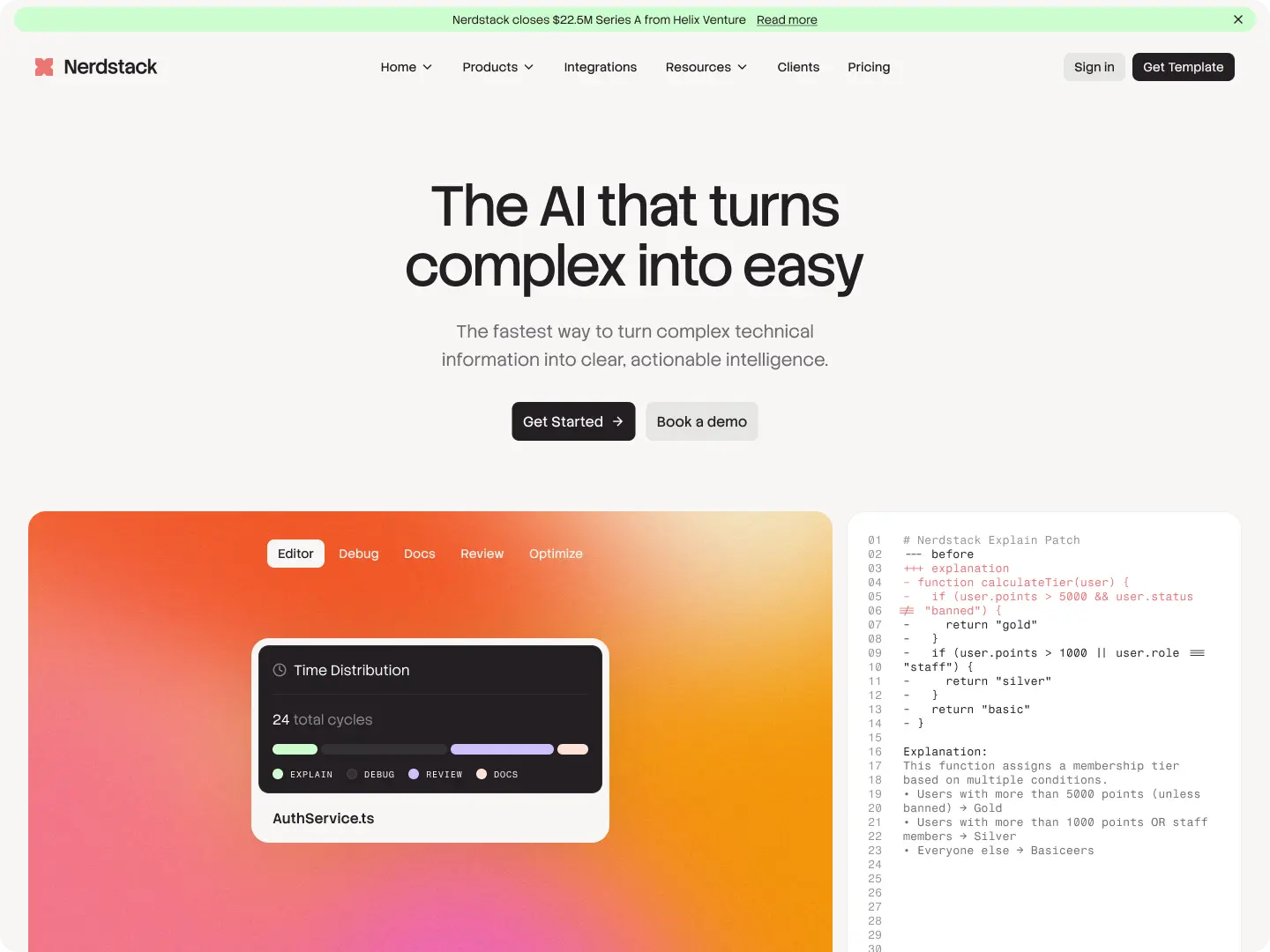
The result is predictable: onboarding slows down, architecture decisions get riskier, bugs hide in the parts no one wants to touch, and every refactor feels like stepping into a dark room with a lighter that might run out at any second. Nerdstack’s newest feature tackles exactly this problem: automatic function-level explanations, generated directly from real code and written in clean, human-comprehensible language. No annotations, no training data, no manual setup — just point Nerdstack at your repository and get clear narrative descriptions of what your functions do, how they behave in edge cases, and which risks or assumptions they carry.
Nerdstack on their onboarding materials
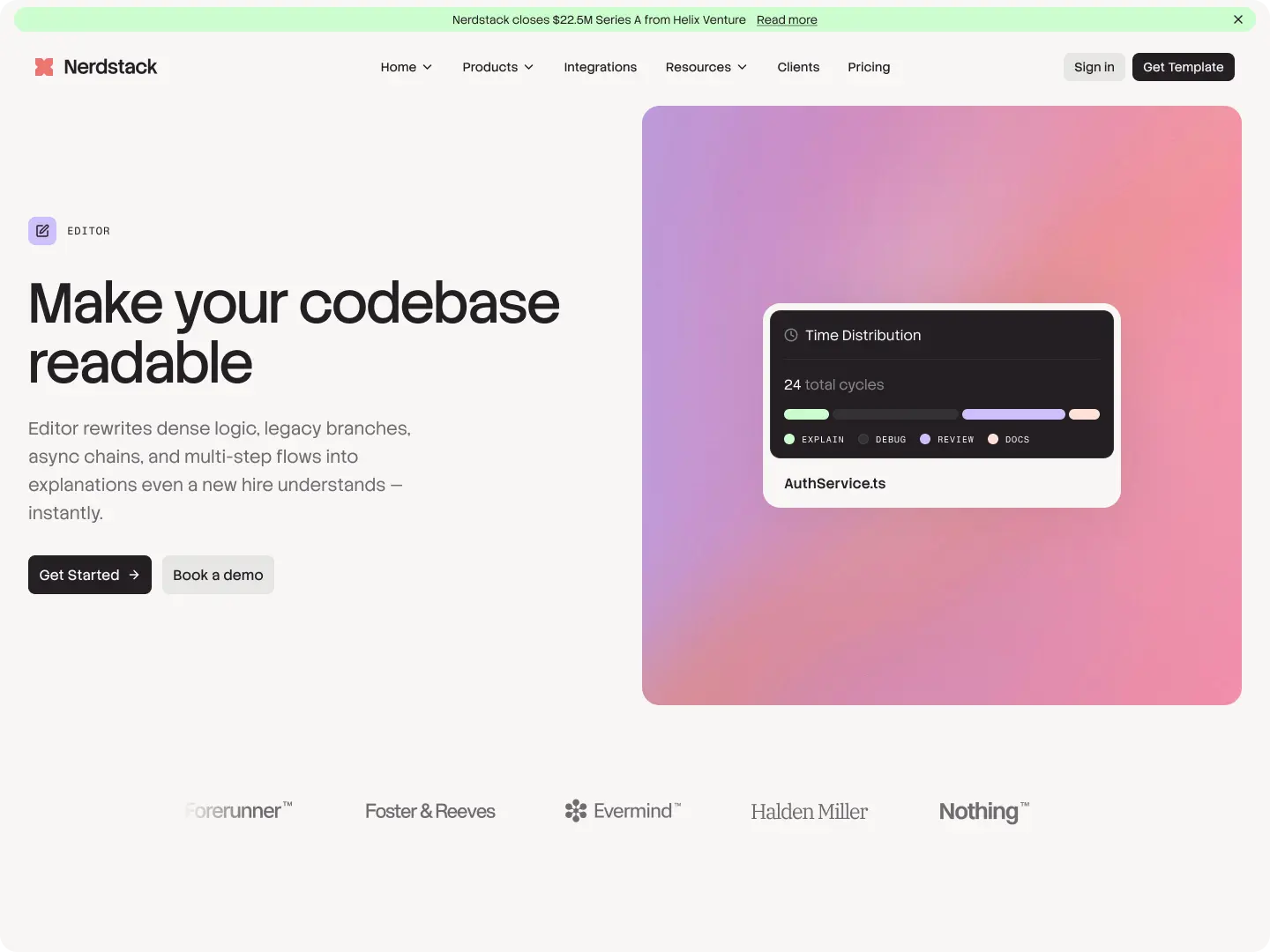
Automatic explanations don’t replace senior intuition, but they restore lost context, helping teams navigate old decisions with clarity. Nerdstack reads the function, interprets its structure, traces its logical flow, analyzes side effects, and extracts the reasoning behind the code — then rewrites everything into a compact, accurate narrative. Engineers receive an explanation that actually reflects the function’s real behavior, not what someone thinks it should be doing.
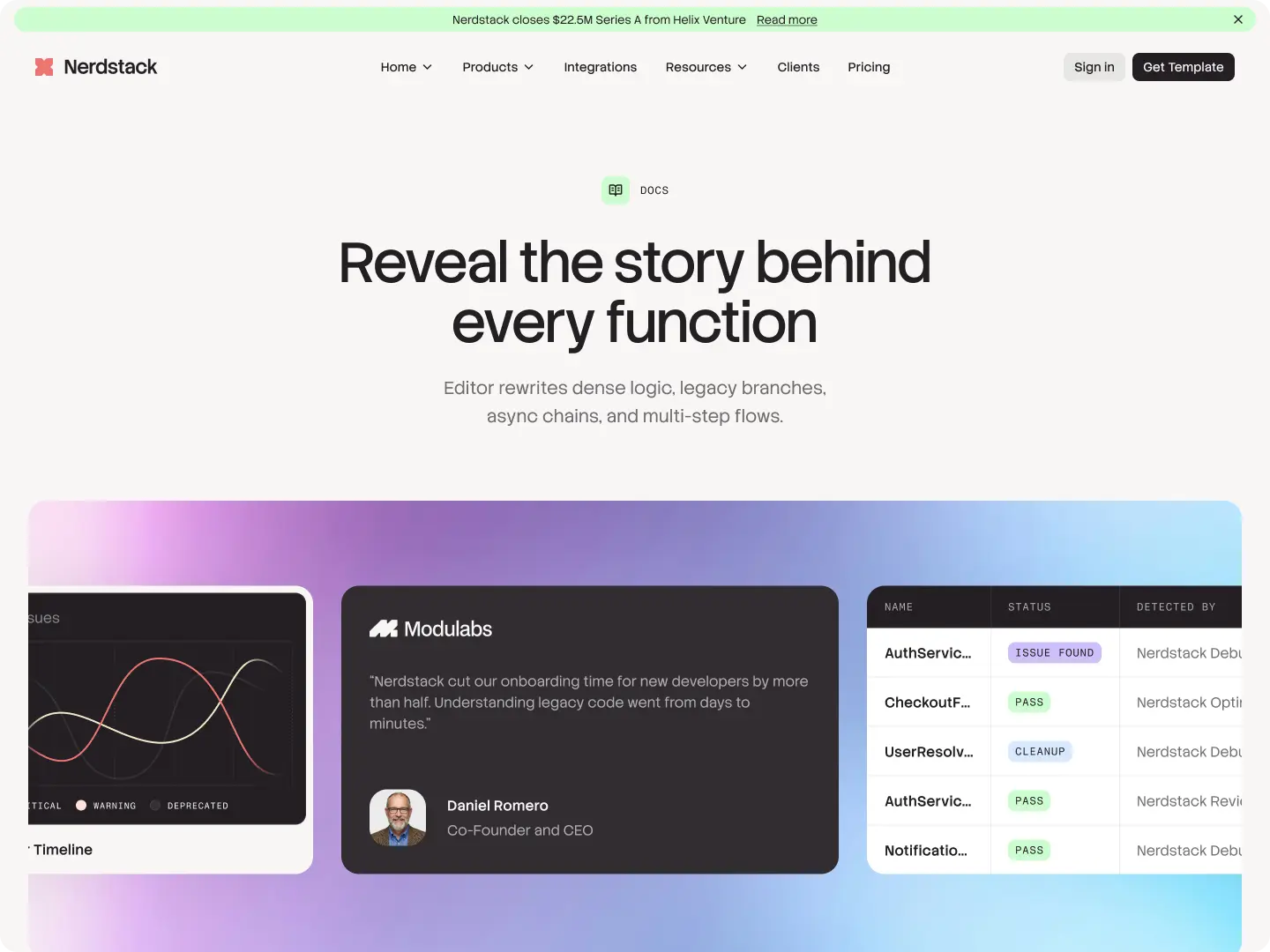
One of the most surprising results during testing came from teams using Nerdstack on their onboarding materials. Instead of building elaborate architecture diagrams or multi-week reading lists, they began linking Nerdstack explanations directly inside their repos.
New hires no longer needed to ask “Which utility handles auth renewal?” or “Why does this fetch wrapper sometimes retry and sometimes not?”. They could click, read, and instantly understand the intention behind the code. Teams reported that onboarding time dropped not because the documentation increased, but because knowledge stopped evaporating. This is especially impactful for distributed teams working across time zones, where the cost of context-switching and clarification requests is even higher.
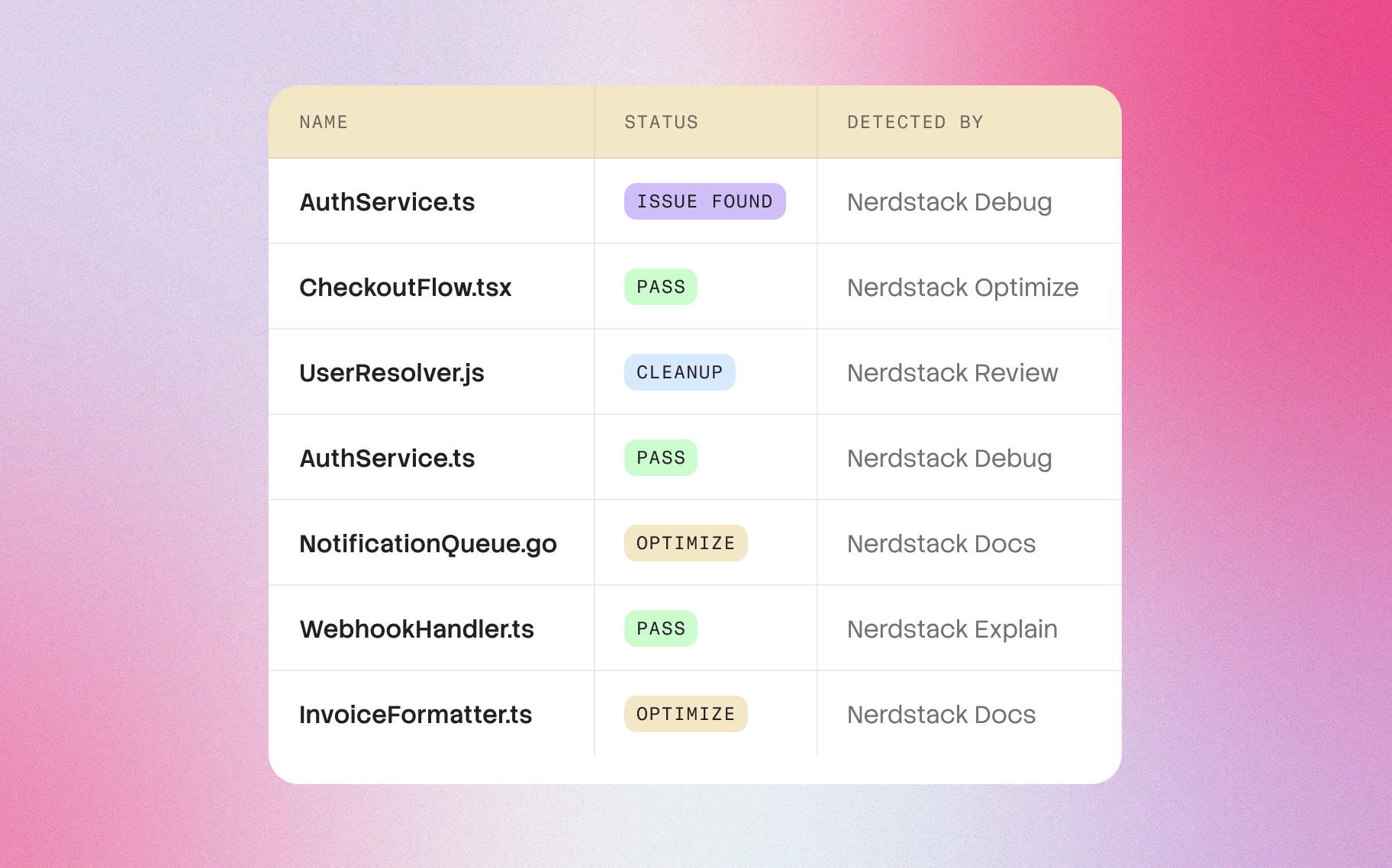
Error-handling logic in a payment flow
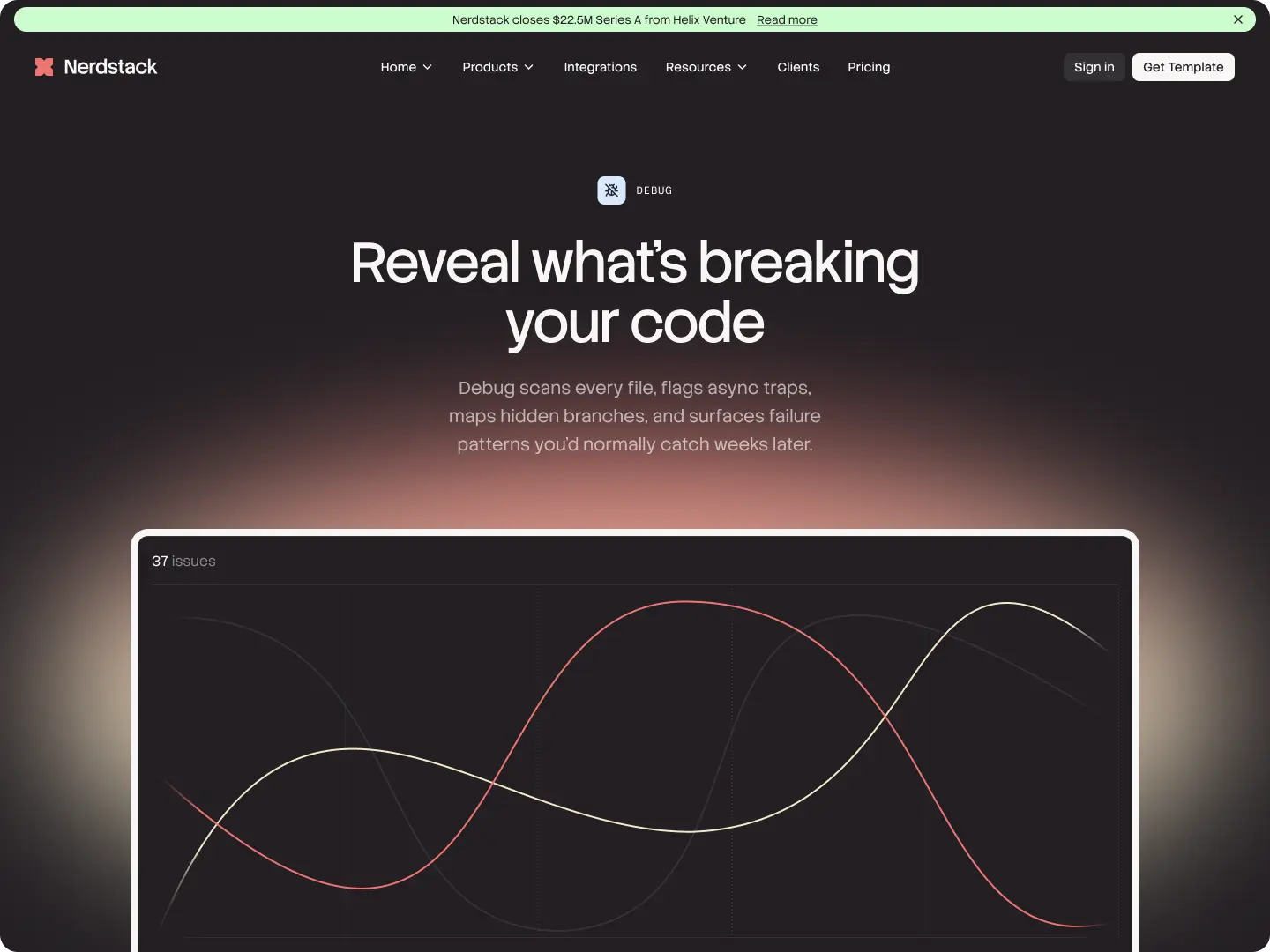
Another major learning was how explanations surfaced risky logic patterns that had gone unnoticed for years. By describing code the way a senior engineer would, Nerdstack implicitly highlights inconsistencies, dead paths, unreachable branches, suspicious async chains, or implicit coupling. In one case, a customer discovered a subtle retry bug that had caused unpredictable behavior for months, simply because the explanation pointed out that the function sometimes returned a pending Promise instead of a resolved one.
In another, the system identified that the error-handling logic in a payment flow silently swallowed exceptions that should have been surfaced upstream. These weren’t traditional “bugs”; they were decisions that made sense once but became liabilities over time — exactly the kind of things human-written documentation rarely captures.
Nerdstack dynamically understands
Under the hood, the entire system was built to work with real-world production codebases, not sanitized examples. This means it handles messy patterns, legacy modules, deeply nested components, and frameworks like React, Next.js, Express, Django, Laravel, and more.
Nerdstack dynamically understands how a function interacts with external systems, state, and dependencies. It maps out the control flow, identifies side effects, and extracts behavior across different execution paths. Unlike static analysis tools that often stop at type information, Nerdstack interprets intent — why a function exists, not just what it does syntactically. That difference is what turns explanations from technical summaries into something humans can actually rely on when making decisions.